

Films
Engineering films
We explain the problems we work on with scenes we build in Blender: how one frame travels a production line, the object a vehicle cannot see, a bird and a drone that look the same in one frame, when not to compute, and training data you cannot film. Concept films illustrate a principle; they do not prove performance. A number appears on screen only when we measured it, with its setup and method.
- Films
- 10
- Total length
- 9:43
- Transcript
- TR · EN · DE
- CONCEPT FILM4
- ILLUSTRATION + BENCH DATA2
- SYNTHETIC DATA3
- SYNTHETIC COMPOSITE1
Latest film · CONCEPT FILM
Compute Everything? Neuromorphic vs GPU for predictive maintenance
At the edge, the real question isn't how fast we can compute. It's whether we need to compute it all. A Jetson Orin Nano Super runs every sensor window through the whole model; a BrainChip AKD1500 works only when an event arrives. The example is a bearing on a pump motor.
Chapters and transcriptAll films · 10
 1:04
Straight to the GPU: zero-copy PCIe from TI Jacinto to Jetson Orin
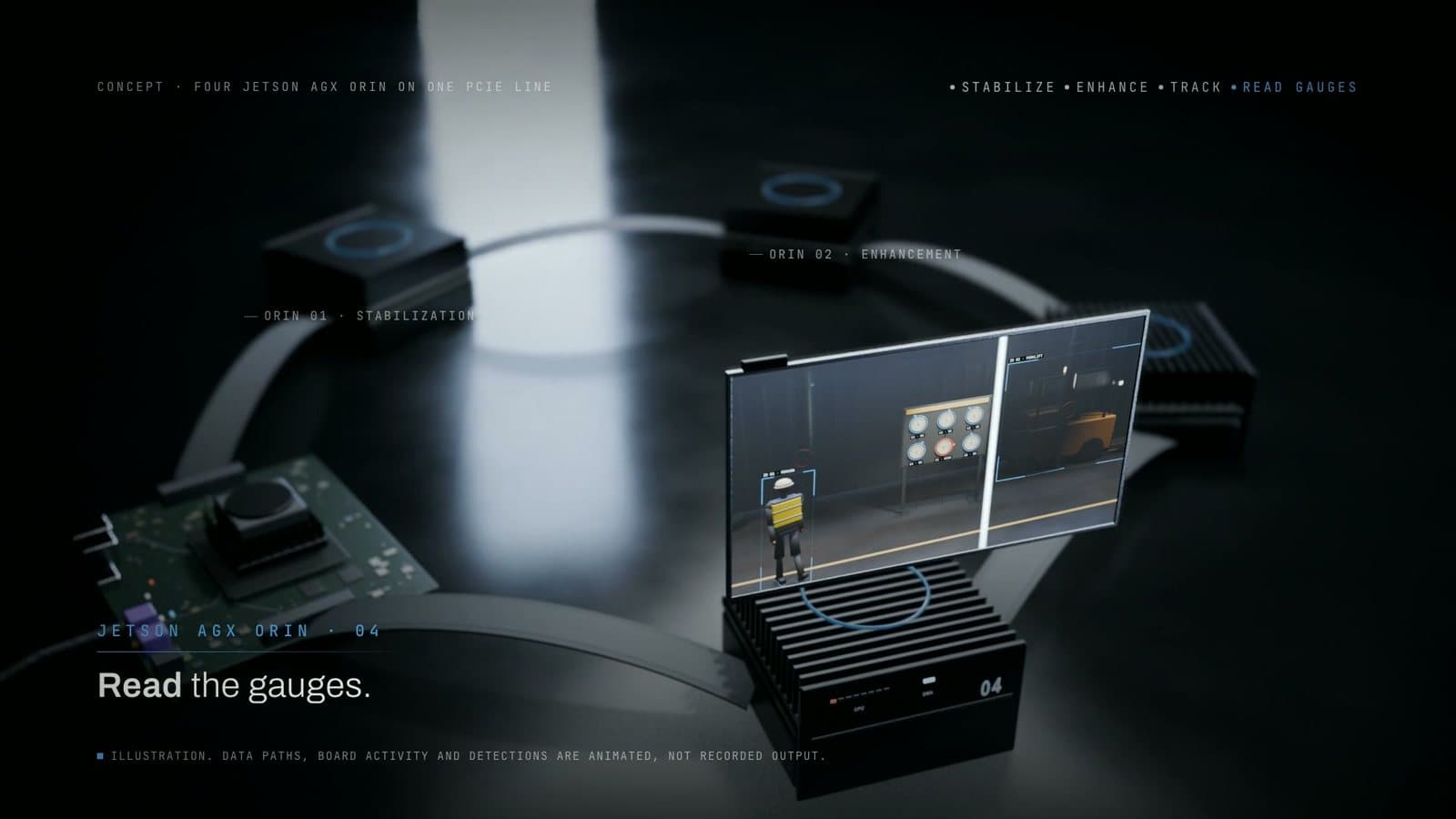
One camera frame, four GPUs, and an operator waiting to see it. The frame lands on a TI Jacinto, DMA takes it from there, and it crosses PCIe straight into the GPU memory of a Jetson Orin; the CPU never touches it. Then the same boards and the same cable, with the CPU copying every frame.
 1:00
Synthetic data for railway obstacle detection: the rails are the ruler
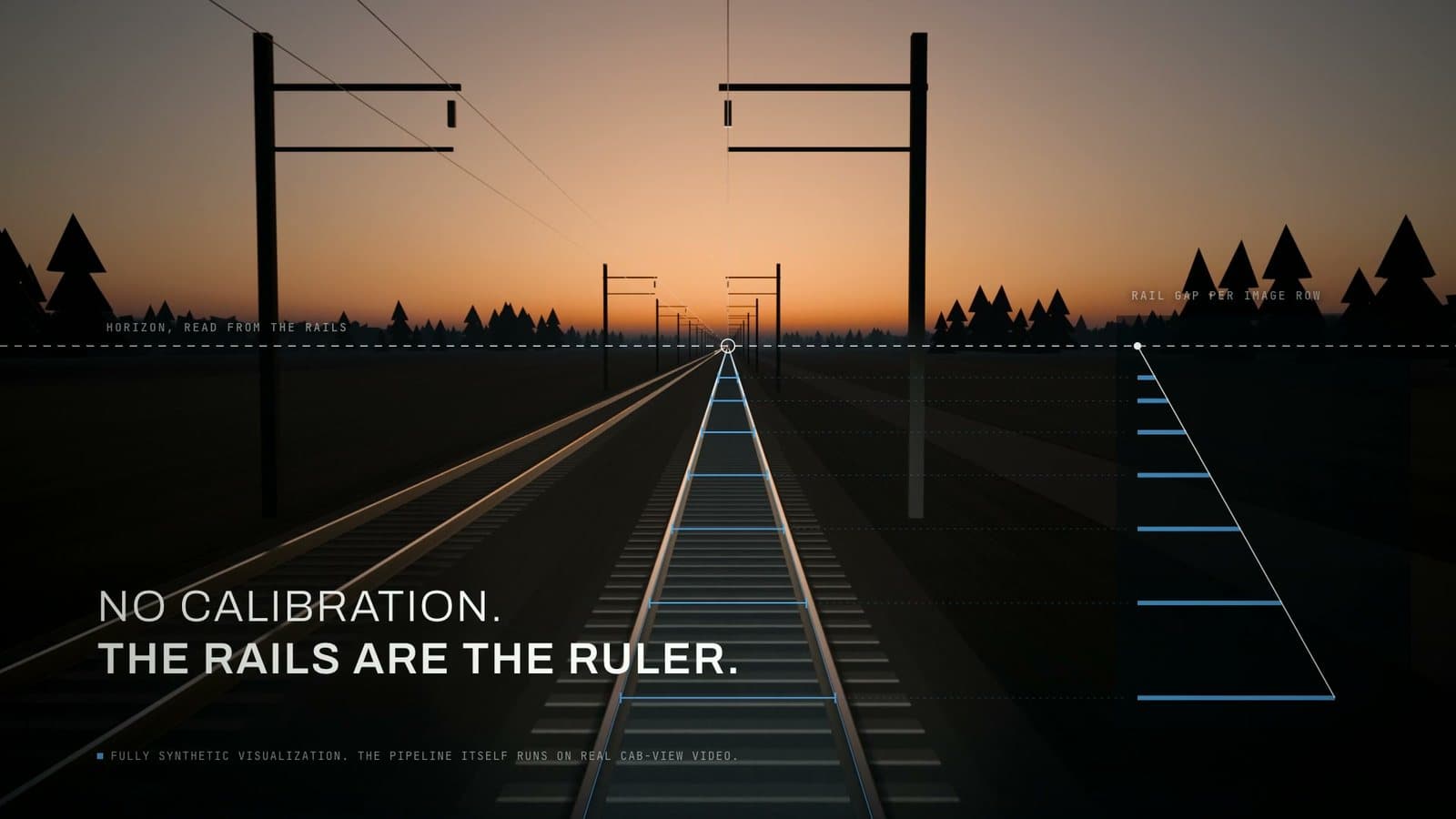
You cannot wait for an obstacle on the track, and you cannot stage one. So the training data is built on real cab-view video, and every step is measured: the rails give horizon and scale without calibration, a placed obstacle stays fixed in the scene, and its label follows what stays visible.
 1:01
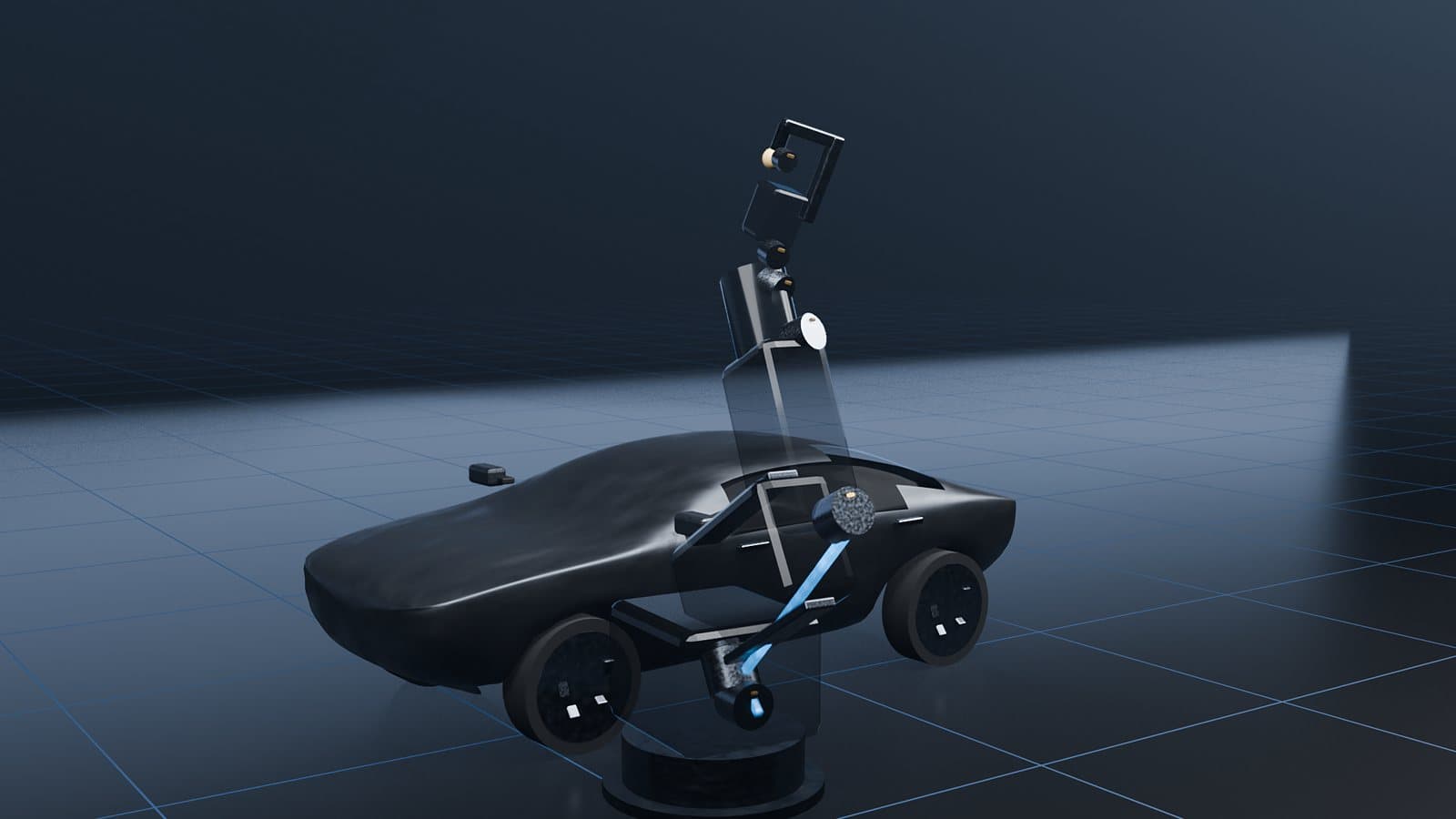
Real time has a cost: when not to compute
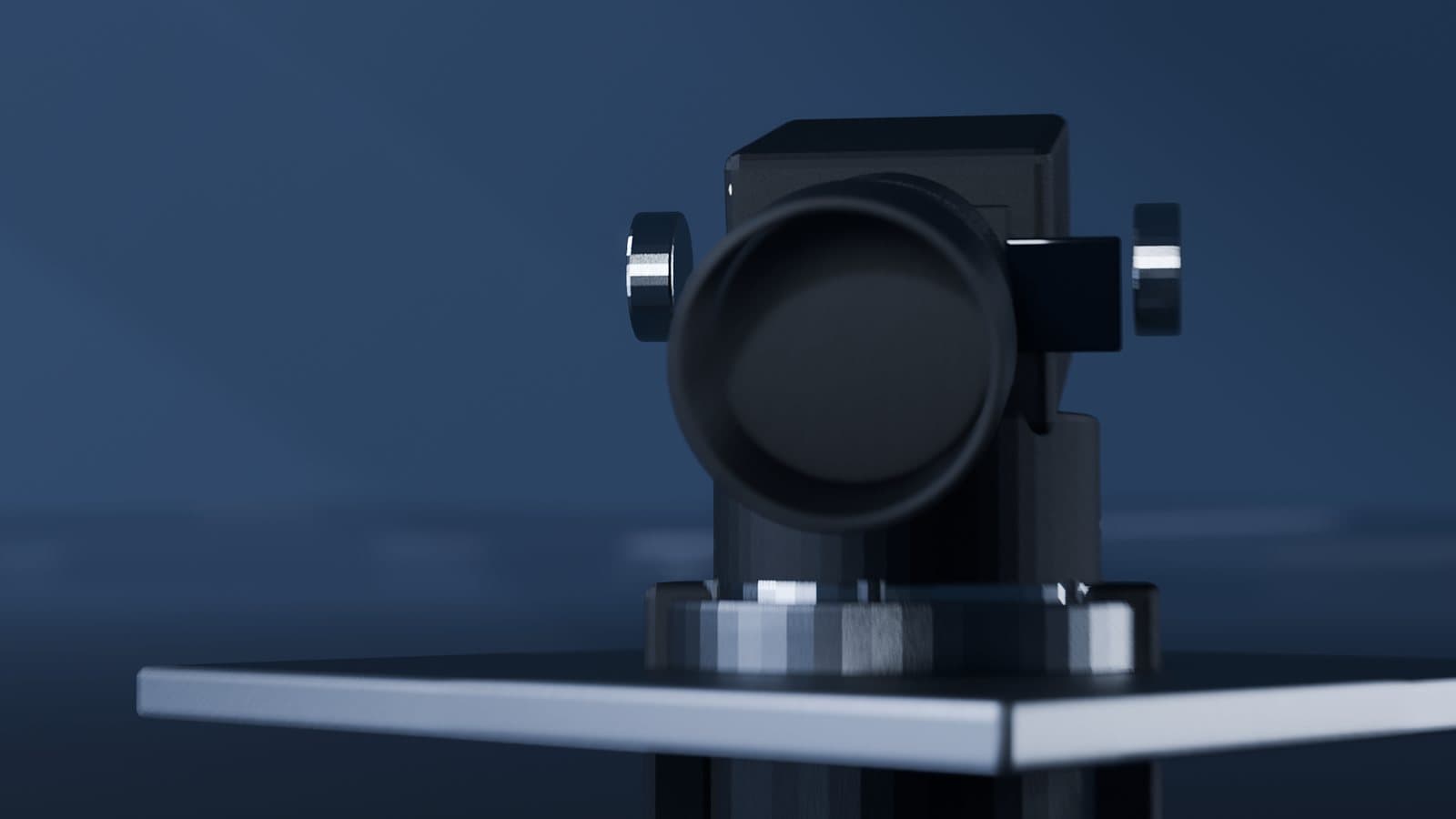
A sensor on a mast keeps track of an object in the sky. The heavy model runs on one frame, and the frames in between are carried forward by a far cheaper prediction. Continuous awareness, less unnecessary compute.
 1:36
The object your vehicle cannot see: cooperative perception
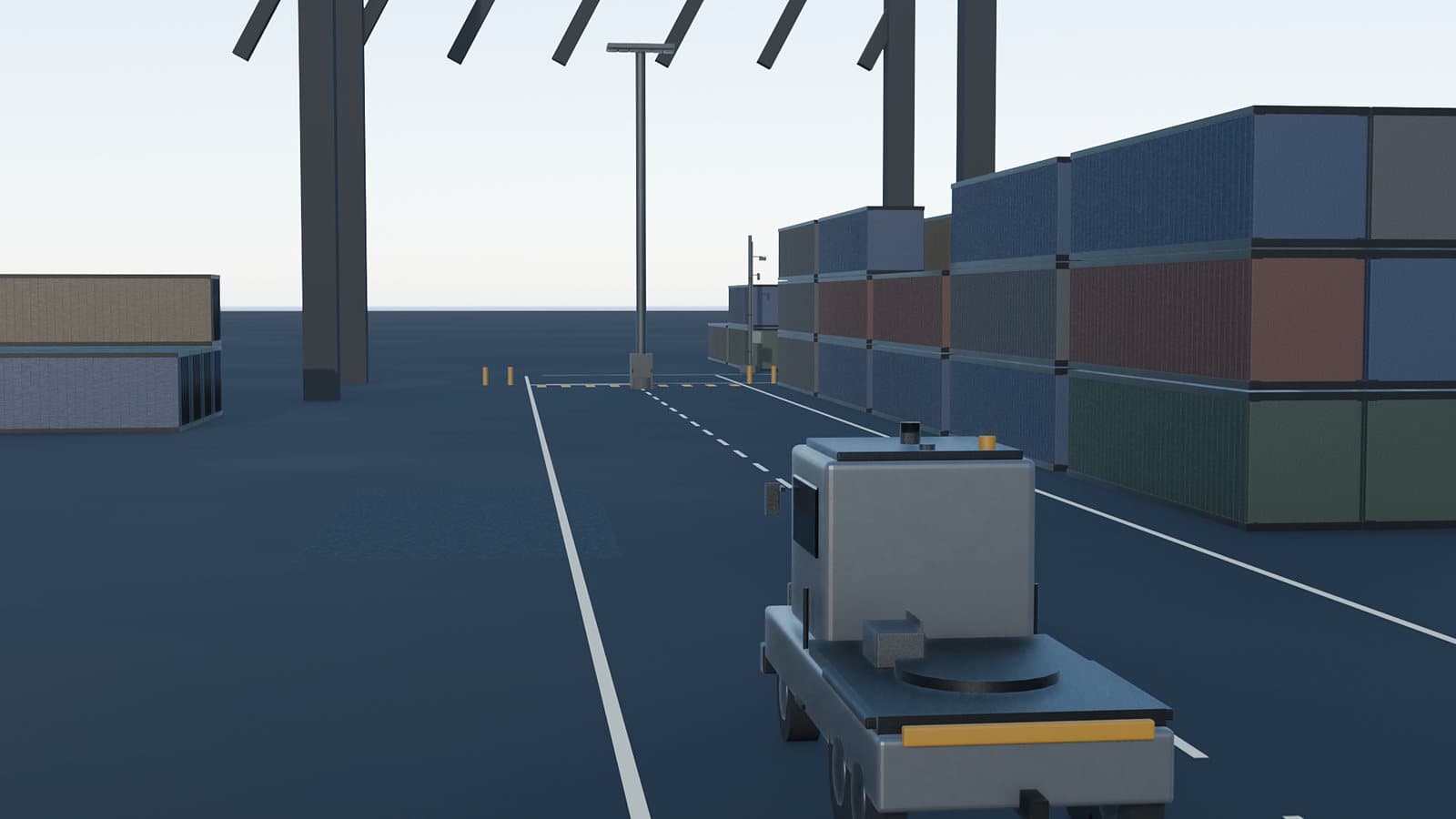
An autonomous terminal tractor approaches a junction where a container stack hides a forklift. A roadside perception node sends the state of the object, not another video stream, and the vehicle slows before it can see anything itself.
 1:20
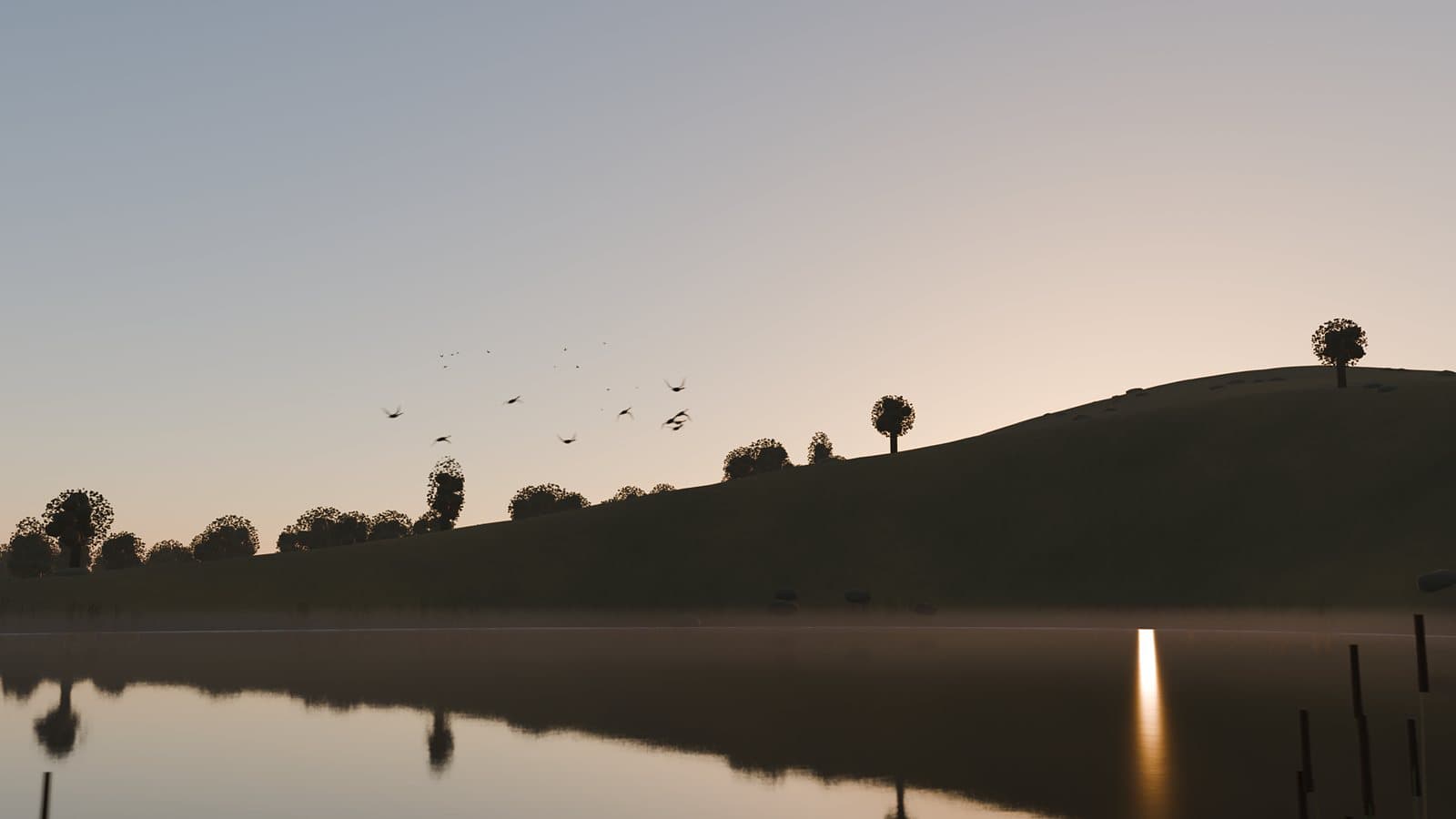
A track is a shape in time: telling a bird from a drone on one mast
In a single frame a bird and a drone are the same dark dot. A tracker turns each dot into a path; one path in this film never flaps, flies straight, stops in the air and slides sideways without turning. Sound is the second cue.
 1:20
One frame, every machine: how EtherCAT moves data on a production line
The controller builds one frame every cycle, with a place for every device on the line. As it passes, each device takes its command out and writes its answer back in, in hardware, in transit. Measured on our bench: 19.2 µs average, 30.9 µs maximum, 0% packet loss.
 0:27
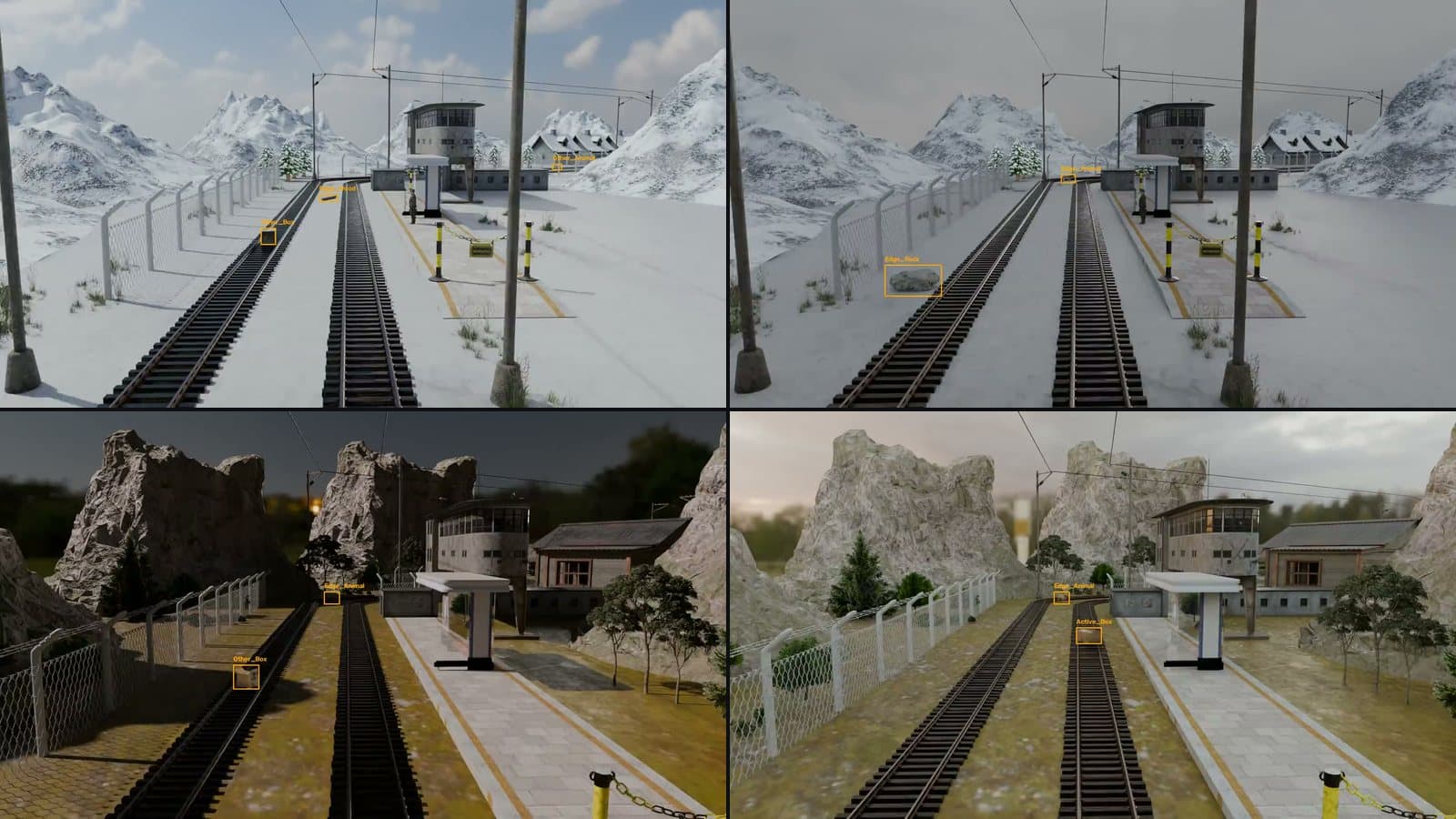
We didn't wait for winter: one railway scene, four conditions (synthetic data)
One railway scene, one camera path, four environment conditions, rendered in Blender instead of filmed. The orange boxes are ground truth written by the renderer, identical in all four conditions.
 0:20
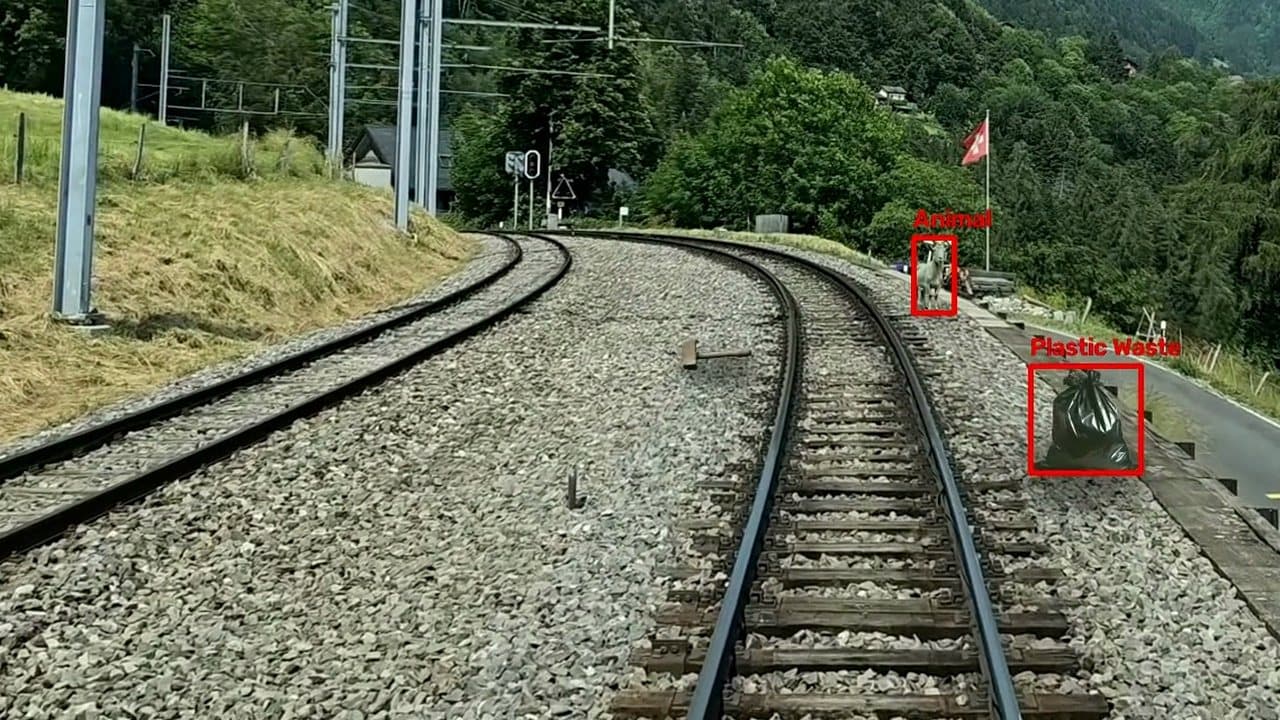
Auto-labeled synthetic obstacles on real railway footage
Synthetic obstacles composited onto real cab-view footage: rail segmentation per frame, world-locked placement scaled against the track gauge, and YOLO labels that come out of the placement step. This run: 960 frames, 8 classes, 3,145 annotations.
 0:35
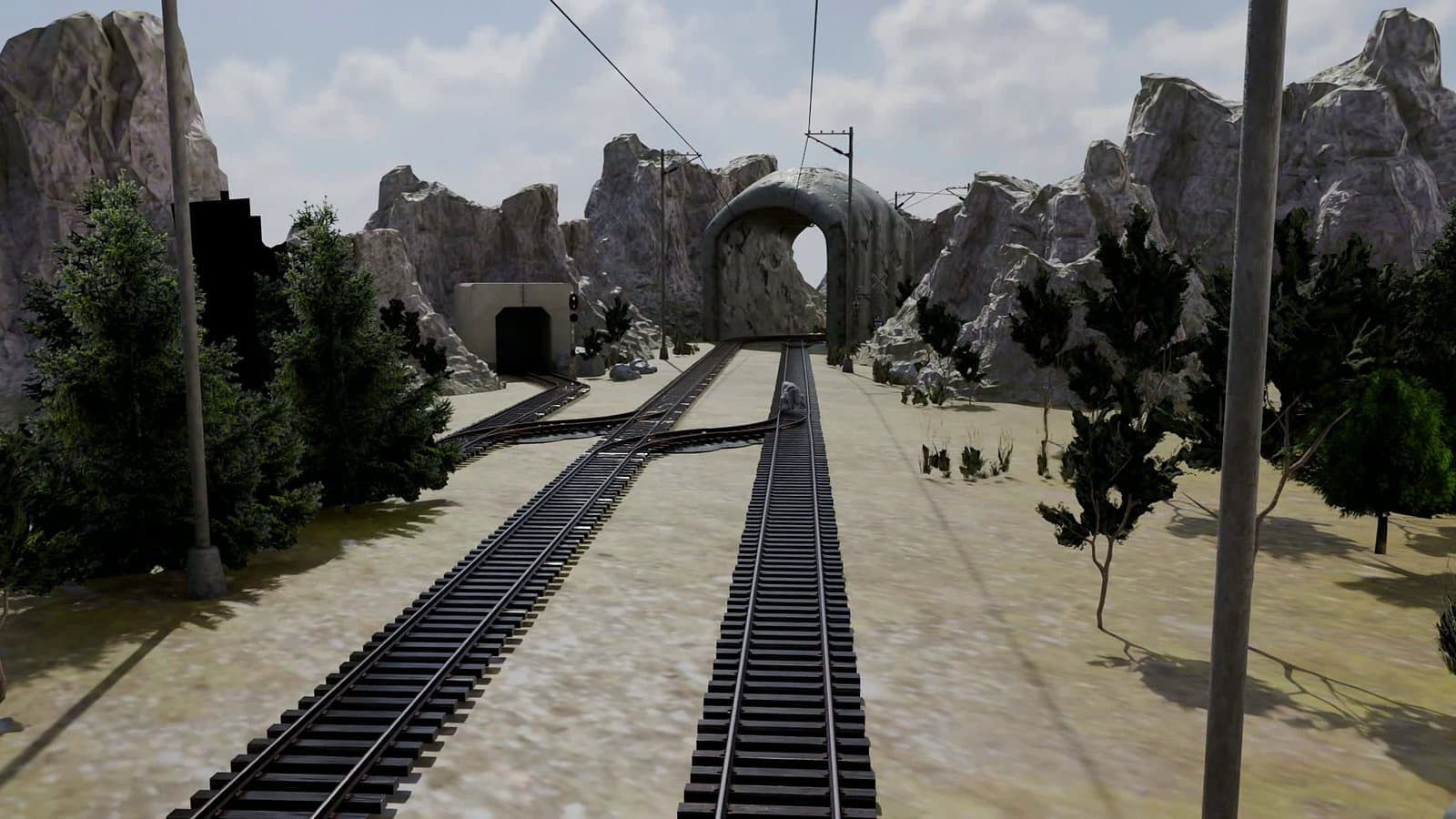
Training data you cannot film: synthetic railway obstacles in Blender
You cannot put a rock in front of a train to collect training data. The scene is generated in Blender instead, and the labels come out with it: rock, animal and box on the track, each with an automatically generated box and class label.
Concept film
The scene, the vehicles and the boxes and tracks on screen are our 3D animation, not detector output. It shows an architectural principle and claims no measurement.
Bench data
If a number is on screen, we measured it on our own bench and its setup sits next to it. Today that is only the EtherCAT film, and we publish the maximum alongside the average.
Synthetic data
The boxes in the railway films are not model predictions but ground truth written at render or placement time. The footage is generated, not recorded in the field.